Faq

  • What shoes should I wear?

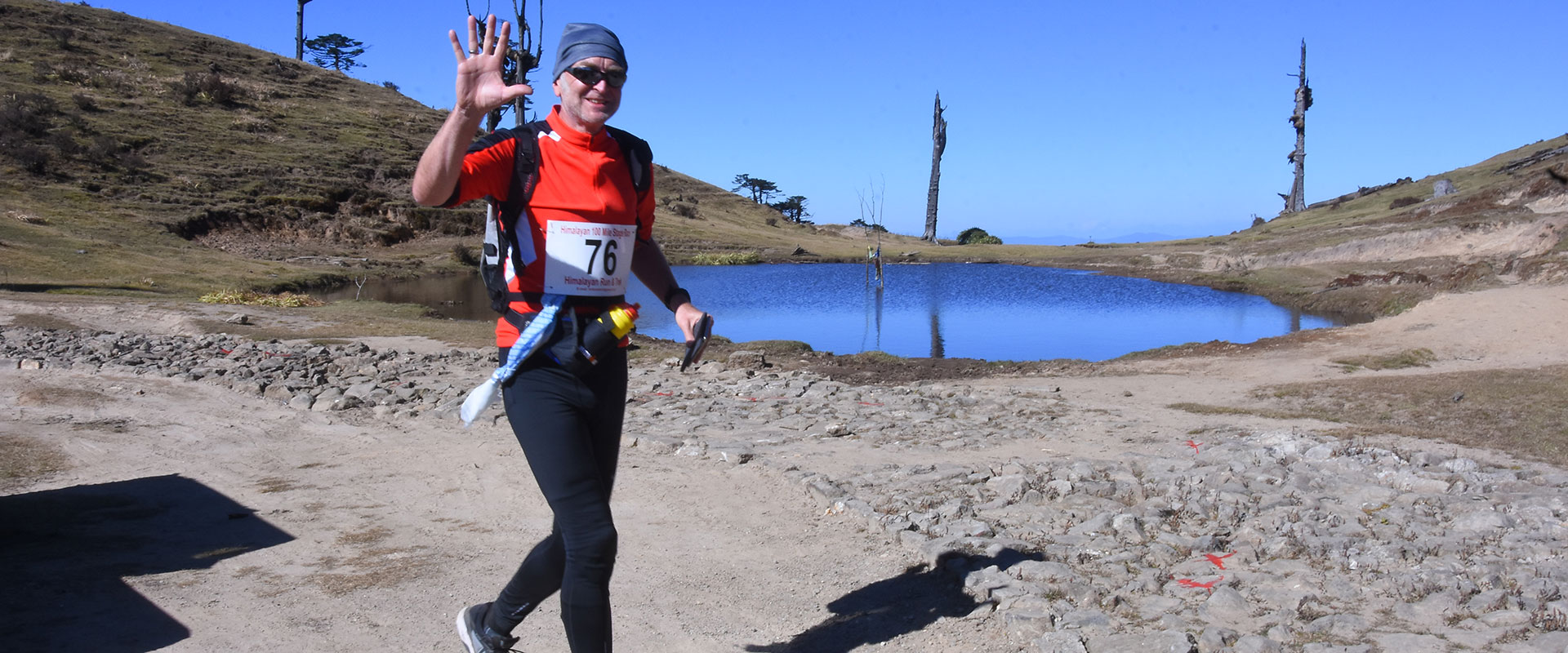
    The Himalayan Stage Race and Mount Everest Challenge takes participants on a wide variety of terrain - from roads, to cobblestones, to stone paths and rough trail. Accordingly, we recommend that participants consider bringing more than one pair of shoes to race in. The first and last days of the stage race can be run in road shoes, but for the other stages, we recommend trail shoes or lightweight hiking shoes.
  • What clothes should I wear?

    Plan to bring a variety of clothing, since you will be running in a wide range of climates. We recommend, at a minimum, a base layer, a heavier top, a light running jacket, Tee shirt, tights, shorts, gloves, and a knit hat.

  • Do I need to bring a sleeping bag?

    Guest houses / mountain huts / lodges will provide you the blankets, but we recommend that you bring your own sleeping bag.

  • What is the standard of accommodation?

    It’s a remote area and the hotels are not luxurious by western standards, but they are neat and clean Lodges, huts and hotels. In the town of Mirik there will be attached bathrooms and in the rest of the places you may have attached or common bathrooms. These accommodations have been used by us since 1991.

  • What medical support do you have?

    We have an excellent team of qualified doctors and support medics who have worked at the race for a number of years. They are experienced with treating endurance athletes competing in high mountain environments.

  • Will I get lost?

    Since the race started in 1991 no one has ever lost their way. Although we are running through remote areas, the trail is clearly marked and easy to follow. All the key junctions are marshalled or sign posted, we have mobile teams moving around the course in off road vehicles and all participants are checked in an out of aid stations on the route so that we can tracek their progress on every stage.

  • Will I suffer from altitude sickness?

    You are unlikely to suffer from altitude sickness provided you follow our doctor’s instructions. If you feel anything like mountain sickness symptoms let us know and our staff will attend to you.

  • What training do I need?

    While this is an open and inclusive race with not time cut offs you do need to prepare for the challenge of running for five consecutive days in the mountains. While you won't be able to precisely replicate the challenge of running at altitude in the high Himalayas you can prepare yourself for some parts of the challenge. Focusing on off-road rather than road running would be a good idea and putting an emphasis on long slow runs or walks, rather than shorter faster racing will also help you. It's also wise to have a segment of your training where you are running on consecutive days. Much of the challenge of the event is mental as much as physical but rest assured the event team will be there to support you to the finish whatever pace you run at.

  • What is the daily elevation?

    Stage 1:

    100 Mile

    • Elevation Gain 2526m
    • Elevation Loss 972m

    100 K

    • Elevation Gain 1274m
    • Elevation Loss 674m

    Stage 2:

    100 Mile

    • Elevation Gain 1074m
    • Elevation Loss 1074m

    100 K

    • Elevation Gain 539m
    • Elevation Loss 539m

    Stage 3 (Mt. Everest Challenge Marathon):

    100 Mile

    • Elevation Gain 1127m
    • Elevation Loss 2735m

    100 K

    • Elevation Gain 393m
    • Elevation Loss 2011m

    Stage 4:

    100 Mile

    • Elevation Gain 526m
    • Elevation Loss 442m

    100 K

    • Elevation Gain 526m
    • Elevation Loss 442m

    Stage 5:

    100 Mile

    • Elevation Gain 720m
    • Elevation Loss 702m

    100 K

    • Elevation Gain 171m
    • Elevation Loss 708m
  • Is there any cut off time for daily stages?

    No cut off times; you can run at your own pace

  • What will I get in the aid stations?

    Bananas, mineral water, boiled potatoes, black salt, black pepper, glucose biscuits, and energy powder (Gluon-D), as well as other snacks.

  • What weather can you expect during the event?

    Temperature: Sandakphu (Day time 5 to 10 degree Celsius) night (-1 to 5 degree Celsius) and rest two places between 10 to 25 degrees Celsius).


    Weather: clear skies are typical in the mornings, but after 12 noon clouds may roll down and it might be a little bit cold. If the event is after the first week of November, then you might be lucky to see the snowfall in the Sandakphu as we have twice in the past. 

  • What are the criteria of selection for the event? e.g. 100 Mile, 100K etc.

    If you are physically fit and doing regular practice of running then you can register in any race category. No matter if you are fast or slow, you can race at your own pace. Full support will be provided by us and if you are a 100 miler, and we are happy to switch you to a different race distance if you decide to change your event. We are flexible towards our participants and will do our best to provide them a once-in-a-lifetime-experience.

  • How many participants will be on the trip?

    Up to 70

  • What food will you provide during the event?

    There will be Indian, Chinese and western food on a fixed menu basis. Menus will be available on our pre- departure booklet, which will be shared after registration. Vegetarian, non-vegetarian, and Vaughan food items will be available.

  • Will you have Vegan food throughout the race?

    Yes as long as you let us know you are a Vegan in advance.

  • What is the average finishing time of daily stages?

    Stage 1:

    8 hrs. (100 mile) & 4.30 hrs. (K),

    Stage 2:

    6 hrs. (Mile) 3 hrs. (K)

    Stage 3:

    9 hrs. (Mile) 6 hrs. (K)

    Stage 4:

    4 hrs. (Mile & K)

    Stage 5:

    5 hrs. (Mile) 3.30 hrs. (K)

  • Can I bring someone with me as a spectator or supporter? Do they need to register or can they make their own arrangements?

    Spectators, supporters, walkers, and trekkers are welcome a long as they register as walkers beforehand. All services will be provided by us, and they will walk a few kilometers and they will take a jeep ride to the finish line. Outsiders or anyone beside participants are not allowed to come inside our camp, hotel, huts or lodges.

  • What support do you offer to slow runners if they are still running in the dark?

    We take care of every participant, whether fast or slow. At least one supporting staff will be on the trail with every participant left competing in the dark.

  • Can I join the stage race only for 5 days instead of 8 days?

    No. Participants are required to attend all race briefings.

  • Do I need walking sticks during running / walking?
    They are not required, but they are recommended.
  • How will I be picked up at the airport?

    Our staff will be there with a plaque card reading “Himalayan Run & Trek” or HRT. They will guide you further.

  • What time should I reach Bagdogra airport to get your transport?

    13:00 hrs. you must be at Bagdogra airport.

  • What time will we reach Bagdogra airport during the return journey?
    11 hrs., so you can book your flight accordingly.
  • Can I arrive 2-3 days before the trip starts to acclimatize and prepare. Will you be able to provide accommodation and support during those days?

    Yes, you can come early for accommodation and we can provide you all the required services.

  • Will I receive photos from the event?

    Yes we have a photographer (s) covering the event and we will share a link the photographs a few days after the event has finished

  • How will you manage if any medical emergency arises?

    As the racecourse is in a remote mountain area, Heli rescue might not be possible at all times, but we will try our best to evacuate any participants requiring medical attention to the nearest hospital. Medical & accidental insurance is must so that in the end you can manage any resulting expenses. Just for your information, there is not a single case of such an emergency since 1991.

  • What will be the start time of daily stages?

    Between 6am to 8am. Depends on the weather & distance.

  • Are there any drop bags facilities?

    Yes, drop bag facilities are available at every stage.

  • During the event will all competitors and supporters be staying together or will they use different accommodation?

    Accommodations for each category's runners will be in the same place.

  • Do you have country agents or should I book directly?

    At present time we have 209Events Ltd. in the UK. So, if you are from the UK kindly book through them.

  • What is the last date of registrations?

    September 15

  • What should I wear during the running?
    We have no fixed dress code so you can wear whatever you like.
  • Is it a trail or road running event?

    It’s a mix of road, trail & cobbled stone road including mountain & jungle trail.

  • How will I find the trail in the dark?
    There will be a red arrow every few meters and also our team will be there with you if you come in the dark.
  • Do I need to bring energy gel, drink etc.?
    Yes, we recommend that you bring your favorite sports food, but we will also provide all participants with food and water on the course.
  • Distance from Mirik to race start point and how long will it take to reach?
    27KM / 1.30 to 2 hrs. journey
-